 Robert Weiner
Summary
Choosing between custom and off-the-shelf software is a pivotal decision for businesses. This article explores the benefits and trade-offs of each option, providing insights into how to make a well-informed choice based on specific needs and circumstances. Readers will gain an understanding of pricing, integration issues, and security considerations, ultimately guiding them toward the best solution for their operational challenges.
Understanding Custom Software and Off-the-Shelf Solutions
When businesses embark on the journey of digitization, one of the first major decisions they face is whether to invest in custom software or opt for an off-the-shelf software solution. Each approach has its merits and drawbacks, and the choice often hinges on specific business needs, budget constraints, and long-term goals.
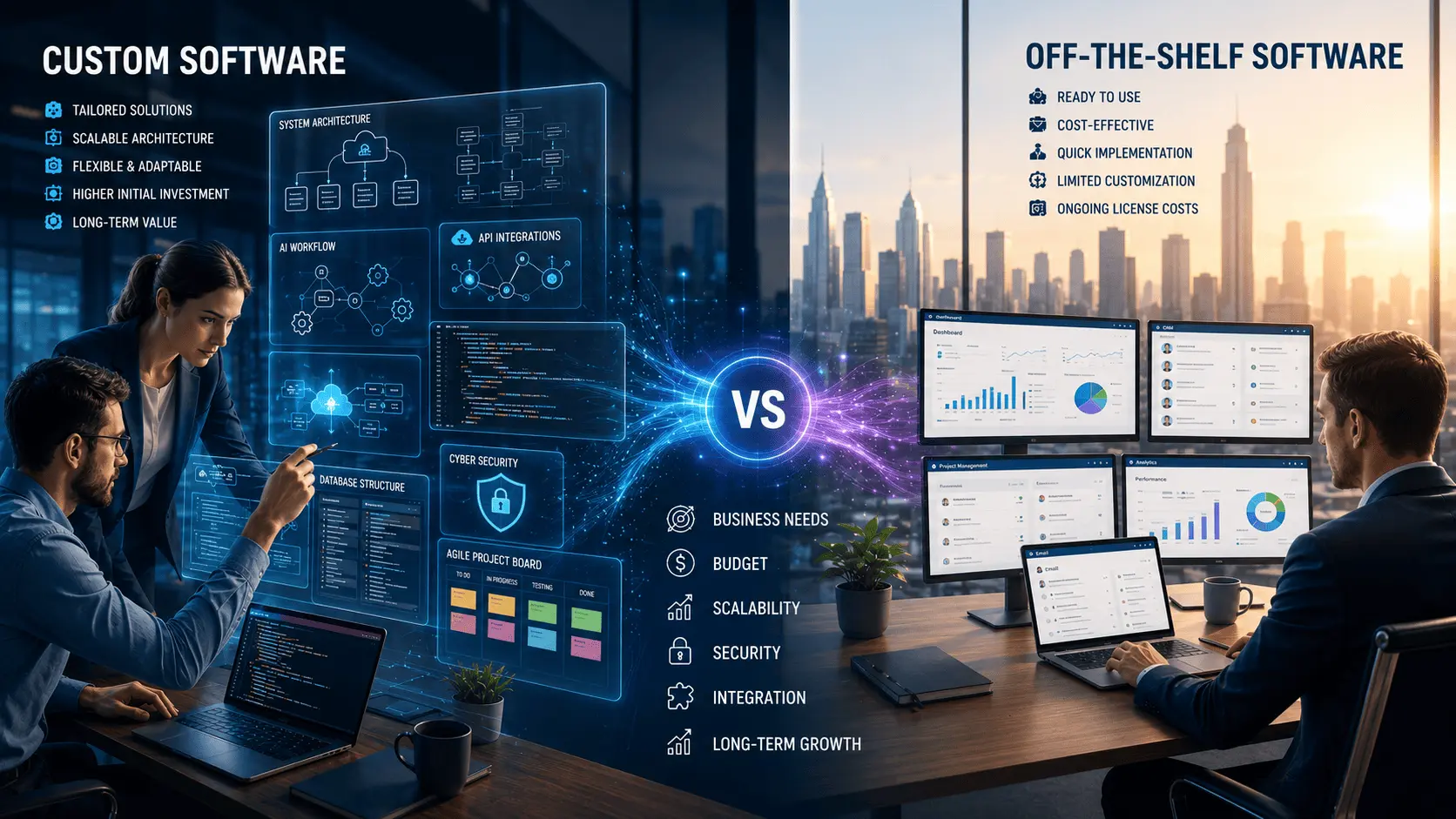
Custom software is tailored specifically to meet a company’s unique requirements, whereas off-the-shelf software refers to pre-built solutions available for general use. Understanding these differences is essential for making an informed decision.
When Custom Software Makes Sense
Consider a mid-sized logistics company that has outgrown its existing software for businesses. Off-the-shelf solutions offered by major vendors simply don’t accommodate the complexity of their operations, which involve intricate routing algorithms and real-time tracking capabilities. Here, bespoke software development can enable the logistics team to create a solution that integrates seamlessly with their existing infrastructure, optimizing both efficiency and user experience.
The need for custom solutions often arises when businesses have specific regulatory requirements or operate in niche markets where generic software simply doesn’t cut it. For instance, a fintech startup might require a unique approach to handle sensitive financial data securely, necessitating a custom approach that adheres to industry regulations.
Benefits of Custom Software Development
The appeal of custom software development lies in its flexibility. Solutions can evolve alongside the business, adapting to changing market conditions or user needs. Unlike off-the-shelf products, which may become obsolete as technology advances, custom applications can be updated and enhanced as required.
Moreover, the initial investment in custom software may be higher, but the long-term savings can be substantial. By reducing the need for additional integrations and workarounds that off-the-shelf software often requires, companies can allocate resources more efficiently. A custom logistics platform, for example, could decrease operational costs by up to 30% by automating routing and tracking.
Advantages of Off-the-Shelf Software
On the other hand, off-the-shelf software can provide immediate solutions for businesses needing to deploy quickly. The upfront costs are generally lower, and the products come with established support and community resources. Small businesses, in particular, may find off-the-shelf options appealing due to budget constraints and the need for quick implementation.
For instance, a startup in the marketing domain might choose off-the-shelf project management software to streamline its operations without the long development timelines associated with custom solutions. This allows the business to focus on growth while leveraging existing tools.
Evaluating the Trade-Offs
Deciding between custom and off-the-shelf software isn’t black and white. Each option comes with trade-offs that must be carefully considered. Custom software requires a higher initial investment and a longer timeline for development. However, this investment can translate to a tailored solution that perfectly fits the business’s needs.
Conversely, while off-the-shelf solutions may be cheaper upfront, they often involve hidden costs. Businesses might find themselves paying for additional features, licenses, or integrations that would have been included in a custom solution. For example, a company might initially choose an off-the-shelf solution for its software development services but later incur costs for third-party integrations to meet their needs.
Custom Software Pricing: What to Expect
Pricing for custom software can vary widely based on complexity and the specific requirements of the project. Development costs can range from a few thousand dollars for simple applications to several hundred thousand for complex systems. Factors influencing these prices include the technology stack, the number of features, and the level of integration required.
Startups should also consider ongoing maintenance and potential scaling costs. A well-planned budget should account for future enhancements and updates, which are crucial for keeping the solution relevant. Additionally, understanding the Custom Software Development lifecycle can help in estimating the total cost of ownership.
Secure Software Development Practices
Security is a critical consideration in both custom and off-the-shelf software solutions. With the increasing prevalence of cyber threats, businesses need to ensure that their software adheres to robust security standards. Implementing practices outlined in the Secure Software Development Framework can enhance the security posture of custom solutions, ensuring that vulnerabilities are addressed during the development phase.
For off-the-shelf products, it’s essential to verify that the vendor consistently updates their software to patch vulnerabilities and enhance security features. A lack of timely updates can expose businesses to significant risks.
Integration and Compatibility Considerations
Another critical aspect of the decision-making process is how well the software integrates with existing systems. Custom software can be designed specifically to work with current workflows, eliminating compatibility issues that often arise with off-the-shelf products. For example, a healthcare provider implementing a new patient management system would benefit from a solution that integrates seamlessly with their electronic health records system.
However, integration can also be a challenge for custom solutions, particularly if the existing systems are outdated or poorly documented. Businesses should conduct thorough assessments of their current architecture before committing to a custom solution to avoid costly integration issues down the line.
With off-the-shelf software, integration can often be a challenge due to the variety of vendors and system architectures. Maintaining compatibility with third-party tools may require additional customization and ongoing support, increasing the total cost of ownership.
Making the Final Decision
Ultimately, the decision between custom software and off-the-shelf solutions depends on a company’s unique context. Businesses must evaluate their specific needs, budgetary constraints, and long-term goals. Engaging in discussions with stakeholders from different departments can provide invaluable insights that inform the decision-making process.
Consulting with experienced developers can also help clarify the implications of each option. Resources like Custom Software Development pros and cons can guide businesses in weighing their options effectively.
In many cases, a hybrid approach may be the most beneficial, combining off-the-shelf solutions with custom components to create a system that meets most needs without the full investment of a custom software suite. This strategy allows companies to leverage the speed and cost-effectiveness of off-the-shelf products while tailoring specific functionalities to their requirements.
Ultimately, the goal is to enhance efficiency, improve productivity, and foster growth, whether through custom software, off-the-shelf solutions, or a blend of both. As technology continues to evolve, staying adaptable and open to new solutions will always be a key element of success.
Software Integration and Implementation
When businesses transition to new software, the integration and implementation process is critical. For both custom and off-the-shelf software, a well-structured plan can help mitigate risks and ensure a smooth transition. Software Integration And Implementation strategies can provide the framework needed for effective deployment.
In the case of custom software, this may involve phased rollouts or pilot testing to gather user feedback and make necessary adjustments before full deployment. For off-the-shelf solutions, ensuring that employees are adequately trained on the new system can reduce resistance and speed up the adoption process.
Frequently Asked Questions
What are the key differences between custom and off-the-shelf software?
Custom software is tailored to specific business needs, while off-the-shelf software is a generic solution designed for a broader audience.
How much does custom software development typically cost?
Costs can range from a few thousand to several hundred thousand dollars, depending on complexity, features, and required integrations.
Can off-the-shelf software be customized?
Yes, many off-the-shelf solutions offer customization options, but they may not be as flexible as fully custom solutions.
What are the security considerations for custom software?
Custom software should follow secure development practices, such as those outlined in the Secure Software Development Framework to mitigate vulnerabilities.
How can I decide which software option is best for my business?
Evaluate your specific needs, budget, and long-term goals, and consult with stakeholders to inform your decision.
