 Nataliya Tidwell
Summary
This article delves into the intricacies of custom software development costs, highlighting key factors that influence pricing, real-world examples, and common misconceptions. It emphasizes the importance of strategic budgeting and choosing the right development partner, providing valuable insights for businesses considering custom solutions. Readers will gain a clear understanding of the financial landscape of custom software development, helping them make informed decisions.
Why Custom Software Development?
In today’s fast-paced business environment, the need for tailored solutions has never been more pronounced. Off-the-shelf software often fails to meet the unique demands of specific industries or organizational workflows. This is where custom software development comes into play, offering businesses the flexibility to create solutions that cater directly to their needs. However, understanding the costs associated with custom software can be daunting.
Factors Influencing Custom Software Development Costs
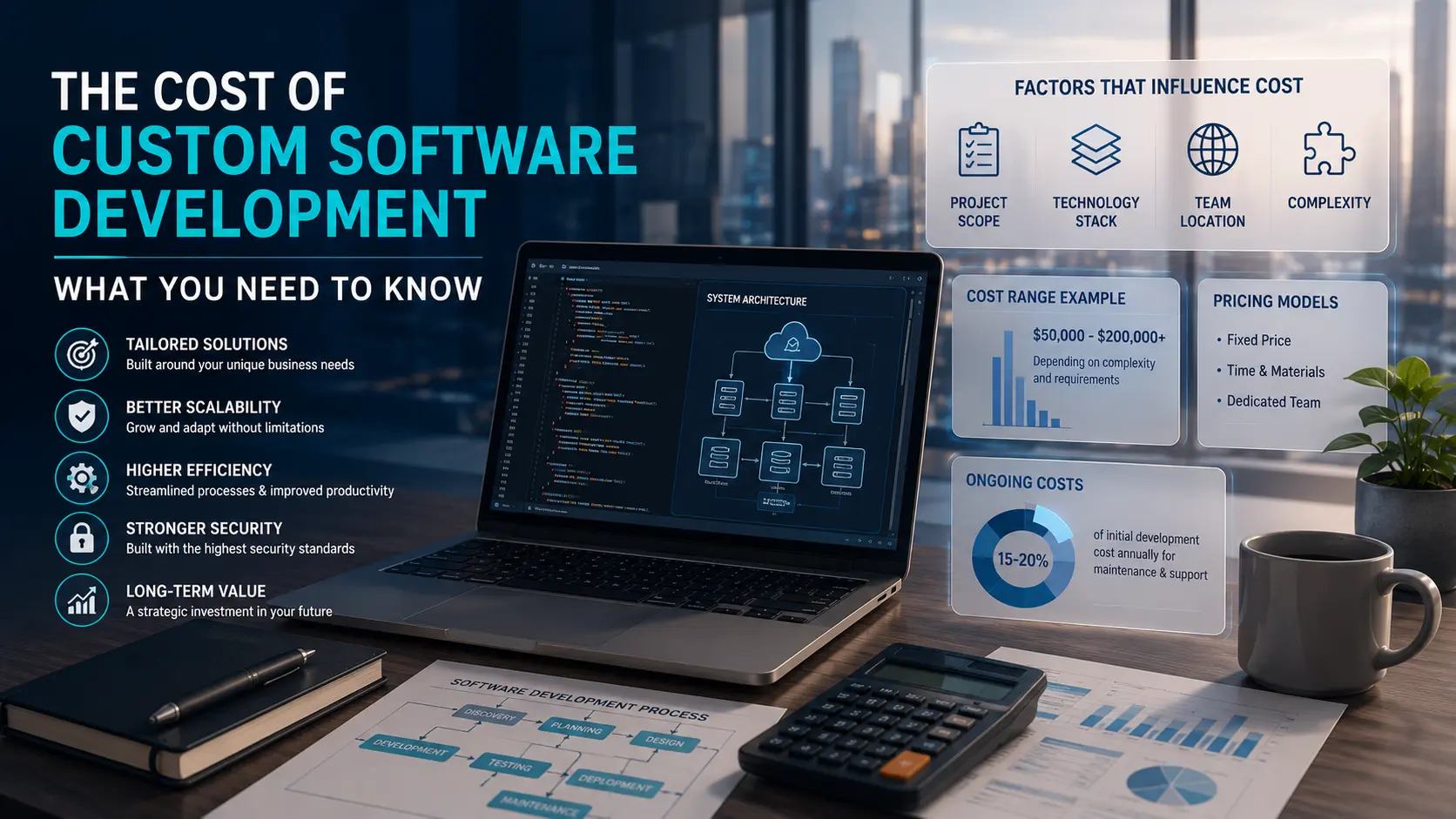
The cost of custom software development is not a one-size-fits-all figure; it varies significantly based on several key factors:
- Project Scope: A larger project that encompasses multiple features and integrations will naturally incur higher costs compared to a simpler application. For instance, developing a comprehensive CRM system will involve far more resources than a basic inventory management tool.
- Technology Stack: The choice of programming languages, frameworks, and databases can heavily influence the cost. For example, using a modern framework like React or Angular for front-end development may require developers who are specialized and, consequently, more expensive.
- Development Team Location: Labor costs vary widely around the globe. Hiring a development team in North America typically costs more than employing developers in Eastern Europe or Asia. This geographical disparity can significantly impact your overall software development budget.
- Complexity: More complex functionalities necessitate more development time and expertise. If the software needs to integrate with existing systems or require high-level security measures, expect the costs to rise.
Real-World Use Cases and Cost Examples
To illustrate how these factors play out, consider a hypothetical company, Tech Innovations, that seeks to develop a custom project management tool. The company envisions integrating features such as real-time collaboration, advanced reporting, and mobile accessibility. After a detailed assessment, they work with a development firm to outline the following:
- Initial Consultation and Planning: This stage involves defining the project scope and requirements, which could cost between $5,000 and $15,000.
- Design Phase: Creating wireframes and prototypes might add another $10,000 to $20,000 to the budget, depending on the complexity of the UI/UX.
- Development Phase: The core of the project, which includes coding, testing, and implementing the software, could range from $50,000 to over $200,000 based on the factors mentioned earlier.
- Ongoing Maintenance and Support: After launch, Tech Innovations can expect to spend 15-20% of the initial development cost annually for updates and technical support.
Understanding Pricing Models
Different pricing models exist in the realm of custom software development, and understanding these can help businesses make informed decisions:
- Fixed Price: This model is suitable for projects with well-defined scopes. It allows businesses to know their total expenses upfront, but it can be inflexible if changes are needed.
- Time and Materials: Here, clients pay for the actual time spent and materials used. This model offers flexibility for projects that may evolve, but it can lead to budget overruns if not monitored closely.
- Dedicated Team: In this model, a team of developers is allocated to a project for an extended period. This can be beneficial for ongoing projects needing continuous development and support.
Estimating Your Software Development Budget
Creating a budget for custom software development involves more than just calculating direct costs. Here are strategies to ensure your budget is realistic and comprehensive:
- Conduct Market Research: Understanding the market and the competitive landscape can provide insight into pricing expectations and help you allocate funds appropriately.
- Include Contingency Funds: Set aside 10-20% of the total budget for unforeseen expenses that may arise during development.
- Regularly Review Your Budget: Throughout the development process, maintain open communication with your development team to adjust the budget as necessary and ensure all stakeholders are aligned.
The Importance of Choosing the Right Development Partner
Partnering with the right custom software development service is crucial. Look for companies that not only possess technical expertise but also understand your industry. A company like On Wave Group has a proven track record of delivering custom solutions tailored to diverse business needs. Their expertise can help you navigate the complexities of AI software development and other advanced technologies.
Common Misconceptions About Custom Software Costs
As with any industry, misconceptions can cloud judgment. Here are a few common ones:
- Custom Software is Always Expensive: While custom solutions can be more costly than off-the-shelf products, the long-term benefits often outweigh these initial investments.
- One-Time Payment: Many businesses underestimate ongoing costs. Regular maintenance, updates, and potential scaling needs should all be factored into the total cost.
Conclusion
Understanding the costs associated with custom software development requires a careful assessment of various factors, from project scope to the choice of technology and team. By considering real-world examples and adopting a strategic approach to budgeting, businesses can make informed decisions that lead to successful software solutions. For those interested in diving deeper into the pros and cons of custom software, Custom Software Development provides a valuable resource. As technology continues to evolve, staying informed about the latest trends in software development will be essential for businesses looking to thrive in a competitive landscape.
Frequently Asked Questions
What is the average cost of custom software development?
The average cost can vary significantly, ranging from $50,000 to over $200,000 depending on project scope, complexity, and team location.
How can I estimate my software development budget?
Conduct thorough market research, include contingency funds, and regularly review your budget with your development team to ensure accuracy.
What factors affect the cost of custom software development?
Key factors include project scope, technology stack, team location, and the complexity of functionalities.
Are there affordable options for custom software development?
Yes, outsourcing to regions with lower labor costs or opting for smaller development firms can help manage expenses.
What are the common misconceptions about custom software costs?
Many believe custom software is always expensive or that it requires a one-time payment. In reality, ongoing maintenance and support are also necessary.
